




Plant–Plant Competition Dynamics in Summer and Winter Cereal Crops: Evidence from Controlled Pot Experiments

 4.6 (144 items)
 Limited Time Sale
Free cash-on-delivery fees for purchases over $99
Product details
| Management number | 233411661 | Release Date | 2026/06/27 | List Price | $90.00 | Model Number | 233411661 | ||
|---|---|---|---|---|---|---|---|---|---|
| Category | |||||||||
Summary of the Book: Plant–Plant Competition Dynamics in Summer and Winter Cereal Crops: Evidence from Controlled Pot ExperimentsIntroductory OverviewThis book provides a comprehensive and experimentally grounded analysis of plant–plant competition in major summer and winter cereal crops, drawing evidence from a series of well-controlled pot experiments. It addresses how interspecific and intraspecific competition influence crop growth, resource capture, carbon allocation, and water use under contrasting environmental conditions. By integrating classical competition theory with detailed physiological and morphological measurements, the book bridges the gap between crop ecology and practical agronomy.Core Themes and Experimental ApproachThe book systematically examines competition dynamics among cereals grown as sole crops and in mixed stands, under varying water regimes and at multiple growth stages. Emphasis is placed on understanding how competition operates above ground (light interception, leaf area development, tillering, and stem growth) and below ground (root growth, root–shoot ratios, and carbon partitioning). Both summer C4 cereals (such as corn, sorghum, and millets) and winter cool-season cereals (wheat, barley, rye, and oats) are investigated, allowing seasonal and physiological contrasts to be clearly established.Key Findings on Resource CompetitionAcross experiments, the book demonstrates that competition intensity and outcomes depend strongly on crop species, growth stage, and resource availability. Early-season competition primarily affects establishment, leaf area development, and root proliferation, while late-season competition influences dry matter accumulation, carbon allocation, and water use efficiency. Mixed cropping systems generally reduced individual plant performance compared with sole cropping, but two-crop mixtures were consistently less competitive than three- or four-crop mixtures.Carbon Accumulation and PartitioningA central contribution of the book is its detailed treatment of carbon accumulation and partitioning. Results consistently show that dominant crops, particularly corn among summer cereals and wheat among winter cereals, accumulate more above- and below-ground carbon due to higher growth rates and stronger competitive ability. Subordinate crops, such as millets and oats, experience substantial reductions in carbon accumulation when grown in mixtures. Water availability further modulates these effects, with low water levels often enhancing carbon use efficiency and favoring stronger competitors.Water Use Efficiency and Morphological ResponsesThe book highlights important interactions between competition and water use efficiency (WUE). Dominant cereals typically maintain higher WUE under competitive stress, while weaker competitors show pronounced declines. Morphological plasticity—such as changes in tillering, stem girth, leaf area, and root distribution—is identified as a key mechanism enabling some cereals to tolerate or overcome competitive pressure.Implications for Cropping SystemsFrom an applied perspective, the findings provide valuable guidance for designing sustainable cropping and intercropping systems. The evidence suggests that careful crop selection, limiting the number of species in mixtures, and managing water availability can reduce competitive losses and improve overall system productivity. The book underscores that not all mixed cropping systems are inherently beneficial; competitive hierarchies must be considered to avoid yield penalties. Read more
| ASIN | B0GL9N5SZV |
|---|---|
| XRay | Not Enabled |
| Language | English |
| File size | 3.2 MB |
| Page Flip | Enabled |
| Word Wise | Not Enabled |
| Reading age | 10 - 18 years |
| Print length | 285 pages |
| Accessibility | Learn more |
| Screen Reader | Supported |
| Publication date | February 5, 2026 |
| Enhanced typesetting | Enabled |
Bestseller ranking
Agronomy



Customers who viewed this product also viewed
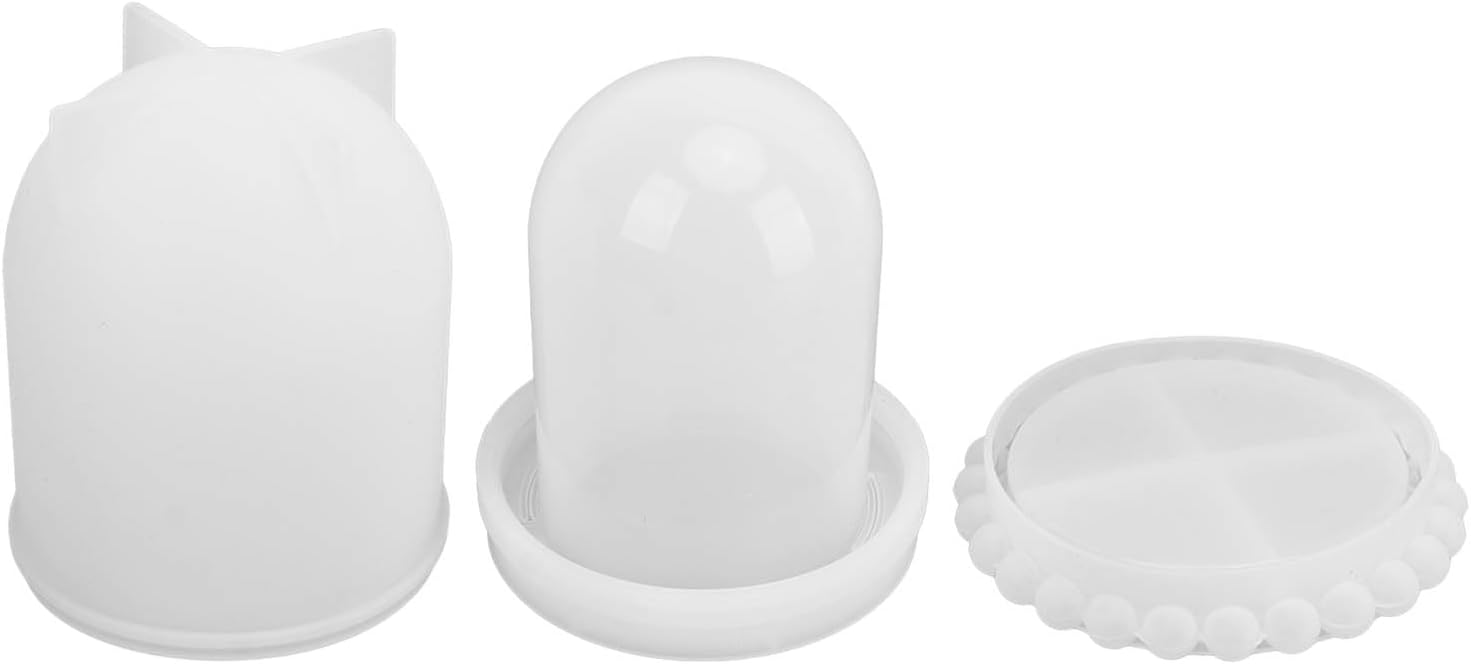
Dice Cups


Correction of product information
If you notice any omissions or errors in the product information on this page, please use the correction request form below.
Correction Request Form